
In primary crushing circuits, wear performance is often treated as a material problem.
In reality, it’s rarely just that.
In high-impact zones like apron feeder drop chutes, liner failure is typically driven by a combination of abrasion, impact energy, and installation method — not hardness alone.
The Real Problem: When Abrasion Meets Impact
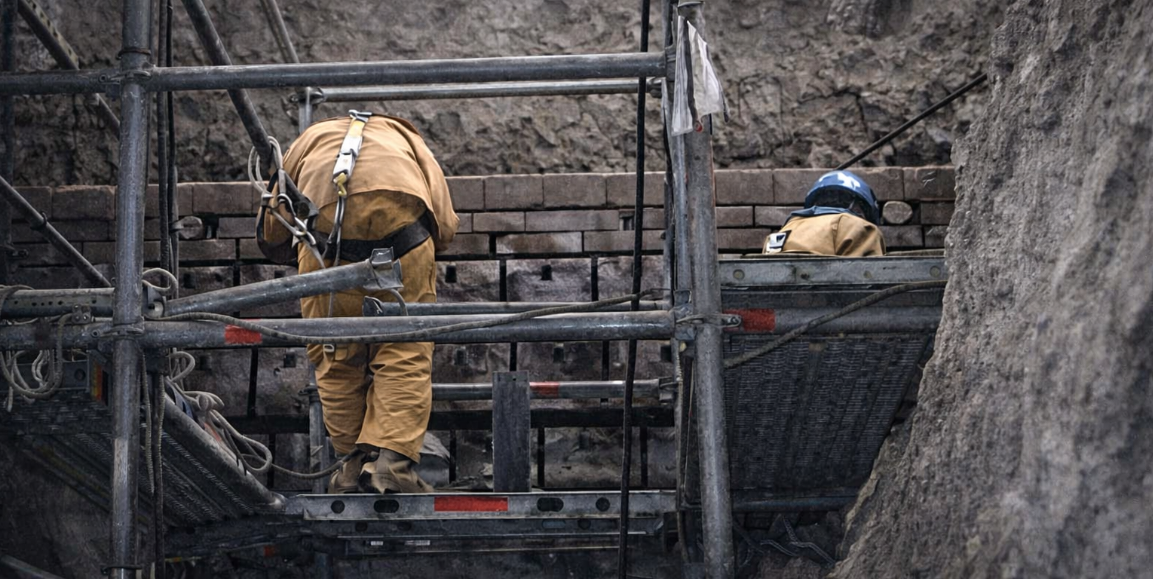
In this case, a mining operation was facing frequent maintenance on a primary crusher apron feeder drop chute.
- Liner life: 4 weeks in high-wear zones, up to 8 weeks elsewhere
- Maintenance cycle: Monthly shutdowns
- Application constraints:
- ~10 meter (30 ft) material drop height
- 10° chute wall incline
- Direct impact exposure on liners
The result was predictable:
- High wear rates in critical zones
- Frequent liner replacements
- Recurrent crusher downtime
Even with AR500 liners — a common industry standard — the system was failing to handle the combined effect of impact + abrasion.
Why “Stronger Steel” Wasn’t the Answer
A typical response in these situations is to increase material hardness or thickness.
But this assumes wear is driven purely by abrasion.
In reality:
- Impact energy accelerates failure mechanisms
- Welded liners limit flexibility and increase replacement complexity
- Maintenance frequency becomes a system constraint, not just a material issue
This is where many wear strategies fall short — they optimize the liner, not the system.
Engineering the Solution: Beyond Material Selection
Instead of simply replacing material, the approach focused on re-engineering the wear system.
Key changes included:
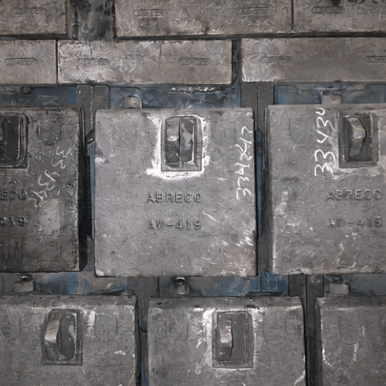
- Replacing welded AR500 liners with modular Abreco® Mech-Lok liners
- Designing the solution based on site-specific conditions (impact, geometry, flow)
- Developing a 3D model of the chute to optimize liner placement and coverage
- Running a phased trial on the highest wear wall before full deployment
The objective wasn’t just longer liner life — it was to reduce operational disruption.
The Results: Measurable Operational Impact
The outcome was not incremental.
- 12× increase in liner life
- Maintenance cycle shifted from monthly to quarterly inspections
- $7.6M+ annual savings in maintenance costs
More importantly:
- Reduced crusher outages
- More predictable maintenance planning
- Improved reliability across the crushing circuit
This wasn’t just a wear improvement — it was a system-level performance gain.
The largest share of savings in this type of application typically comes from reduced downtime on a critical bottleneck asset, not from liner cost alone.
Illustrative example:
- Maintenance frequency before: monthly
- Maintenance frequency after: quarterly
- Estimated downtime per intervention: 10 hours
- Avoided maintenance events per year: 8
- Total downtime avoided: 80 hours/year
If the primary crusher represents a critical production bottleneck, and the cost of downtime is estimated at $90,000/hour, then:
Downtime savings
80 hours × $90,000/hour = $7,200,000/year
Additional annual savings may also come from:
- Reduced liner material consumption: ~$300,000
- Lower maintenance labor and support costs: ~$180,000
Illustrative total annual savings:
$7,680,000/year*
*Actual savings will vary depending on throughput, downtime cost, maintenance scope, and site conditions.
Key Takeaway: Wear Performance Is a System Problem
In high-impact applications, liner performance depends on more than material properties.
It is influenced by:
- Energy transfer (impact vs sliding abrasion)
- Installation method (welded vs modular systems)
- Maintenance strategy and accessibility
- Application-specific geometry
Focusing only on hardness or thickness often leads to diminishing returns.
The real leverage comes from engineering the wear system as a whole.
Final Thought
The difference between monthly shutdowns and quarterly inspections isn’t just a maintenance improvement.
It’s a shift in how the operation runs.